The five elements are everywhere. These elements are the building blocks for everything you see around you. They are for lack of a better comparison, the Lego bricks of nature. Every culture has them, but due to cultural views and lenses they differ a bit in name, but not in function. A small understanding of the elements is presented here for your further understanding.
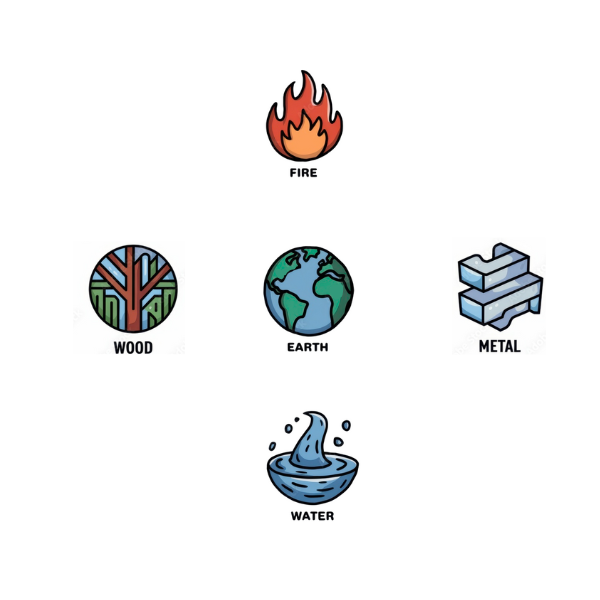
The creative forces.
The elements are the creative force in the world. They are not to be confused with their worldly representations as those are a manifestation of the elements. The manifestations embody the qualities of the element but are not the elements themselves. From the elements all existence on earth is created. A combination of two elements brings forth a new creation. For example, take earth and water. Together they form mud. From mud comes forth wood as the combination of earth and water nourish and allow the wood to flourish. The same mud could shift and transform. If fire is applied, ceramics like bricks are created from the contents of the mud. Earth and water have another product they create called concrete.
One of the aspects of the five elements is to combine with each other in various quantities to bring about a newer creation. It is said that any creation contains within it all the elements of creation. The only difference is the amount of each element present within the creation.
The five elements in focus
The five elements will be covered in order. Both an Eastern and Western perspective will be given to the names of each as they are covered. Although my focus is on Chinese elemental theory, the model still fits into a European, Hindu, or Japanese model as well. Afterwards, the interplay of the five element will be discussed.
The Wood element
Wood is associated with the sprouting and starting that occurs during spring. Trees and other lush vegetation are some of the manifestations of this element. From a Western lens, the elemental association is the air element. After all, what better way to see the air element than to view the movement of air through the swaying branches of a tree.
The Fire element
Fire is an element of action and reaction. Fire expands to cover as much area as possible as quickly as possible. The destructive potential of fire is also beneficial. Fire cooks your food and keeps us warm. Fire is the same across all cultures. Without fire, no human civilization could have survived to modern times especially during the cold harsh winters that occur in some regions of the world.
the Earth element
The earth element is interesting. In the Chinese perspective, it is the center of things. After all we stand upon it and view the stars around us. Earth has many qualities to it, but looking at the Eastern vs Western perspective, major differences show. In the West, we view earth as a cold and dry element. It provides structure and is rigid. In China, not so. The earth element is anything but rigid. In the Western world, we have only four elements. In the East, five elements exist. This missing element in the West is known as Space in some culture. The vastness of space contains everything within it. This is a better understanding of the earth element in Chinese thought. After all, The earth contains all of life and what is needed of life upon it.
The Metal element
Metal is another element absent in the Western view of the elements. However, this element is most closely correlated with the earth element of Western traditions. There is a bit of strange overlap as sometimes metal in China engenders different qualities that muddles the understandings of the elements. All in all, know that metal is cold and rigid in it’s operation. In other words, Metal cuts thorough the fluff.
the Water element
Water is the element of life and flow. The Western element is the same here. After all water is essential to life. Without it most people could not last more than a few days before passing on. Water embodies flow and passivity. What better element to represent this as water visually expands and fills the container it falls into. Water also has a great staying power. The reason is if you view the oceans and lakes, they never seem to dry up.
How the five elements create one another

The elements themselves lead to one another. Water leads to wood. This makes sense as water is necessary for life to sprout and grow larger. Without water raining down, no plant life can grow and thus no life would exist at all. Remember that the wood element represents a sign of life.
Wood in turn will create fire. Another item that makes logical sense. Without wood to fuel fire, it cannot exist. Fire needs a fuel source and wood provides a forever sustainable fuel source. Though fire seems destructive, it is also creative. Something beautiful is birthed from fire like a phoenix rising up from the ashes.
Fire brings forth earth. This one is a little tricky, but here it is. Fire burns wood down to an ash. That looks like soil or dirt especially if heaped together. However those ashes become nutrients. The ashes are leached into the soil with the help of water. Then those same ashes enhance the nutrients within the soil and create a richer soil.
Earth brings forth metal. This makes sense. Metal exists deep within the earth birthed in a womblike environment of darkness and warmth. On the surface, metal is found in the soil and other visible places.
Lastly metal creates water. Full stop. How? Superficially this doesn’t make sense. However it has to do with the observation that condensation occurs. Metal is quite cold. Thus early morning dew would condense on metal. This visual event made it seem that metal generates water. This is like the concept of spontaneous creation. If insects appear on crops out of nowhere, the crops must have generated them! Following this logic, it makes sense that metal generates water at least to the Chinese mind it does.
How the five elements control each other.
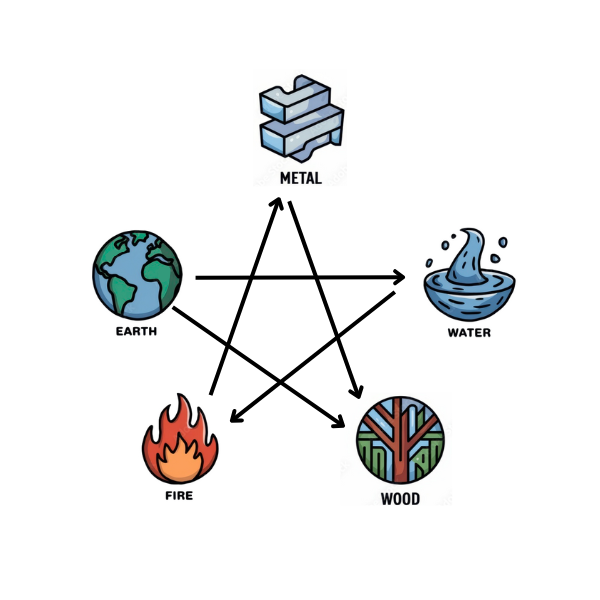
Lastly, the elements also control each other. This is how they keep each other in balance and create harmony. They feed one another but also prevent one another from expanding too much.
Starting off is metal controls wood. This one makes sense if you think of the implements used to cut and shape wood. Metal is known to block the flow of energy. A metal nail of the right size and the correct material can kill a mighty tree.
Wood controls earth. This makes sense when you view what plants do. The roots carve and push through the soil. Even dense soil is no match for the strength of the roots. The roots also prevent erosion. When water flows by, the roots hold the dirt in place, trapping it. This is how wood handles and controls earth.
Earth controls water. Earth absorbs it easily and completely subdues it. When the soil is compacted clay, it prevent water from being absorbed. When the soil is sandy, it drains water rapidly. If the soil is of a good mixture, water will be retained. The soil dictates what water is able to do. Lastly, the soil is responsible for lakes. Without the soil to control it, lakes would drain into the earth.
Water extinguishes fire. Everyone has seen this at some point. Water puts out the fire. Water controls the temperature of a fire but also cuts it off from it’s fuel source. In a strange way, water drowns fire. Now if fire has not reached where water lies, it won’t cross when it does. This is another way that water will control fire.
Lastly fire burns away at metal. Fire will melt metal given the proper temperatures and setting to do so. Metal has no choice when it comes to this. After all, deep within the earth is where metal got its start. It was birthed from the heat deep inside the earth. Thus it makes sense that it would give itself up to the heat of fire.
five Elements are different amongst cultures.
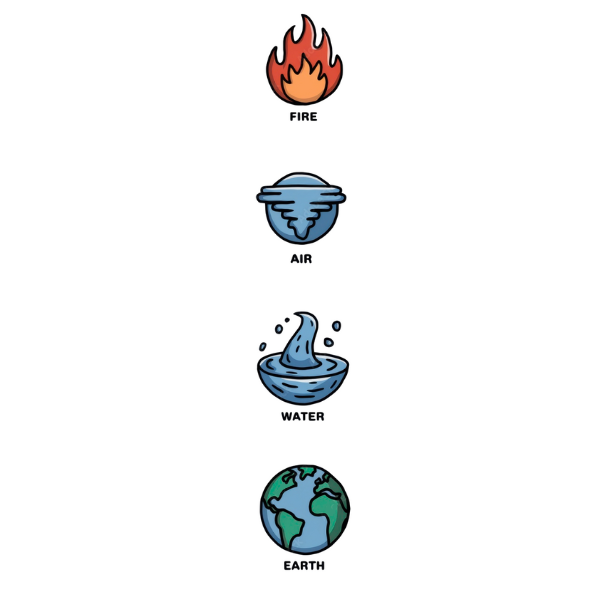
The last section covers how the elements are viewed in a few different cultures. The cultural perspective is always interesting as it is another way to view the same things. Even in modern times, we have elements in the periodic table that can correspond to these metaphysical elements.
In China, as we have covered, the five elements are: wood, fire, earth, metal and water.
India and Japan have the elements as: air, fire, earth, water and space.
In the western world, specifically Europe, The elements are air, fire, water, and earth.
It’s one thing to read about the five elements. It is another thing to experience them for yourself. Go connect with the real elements in the world and seek them out for yourself. Get acquainted. You can also experience them though a session.